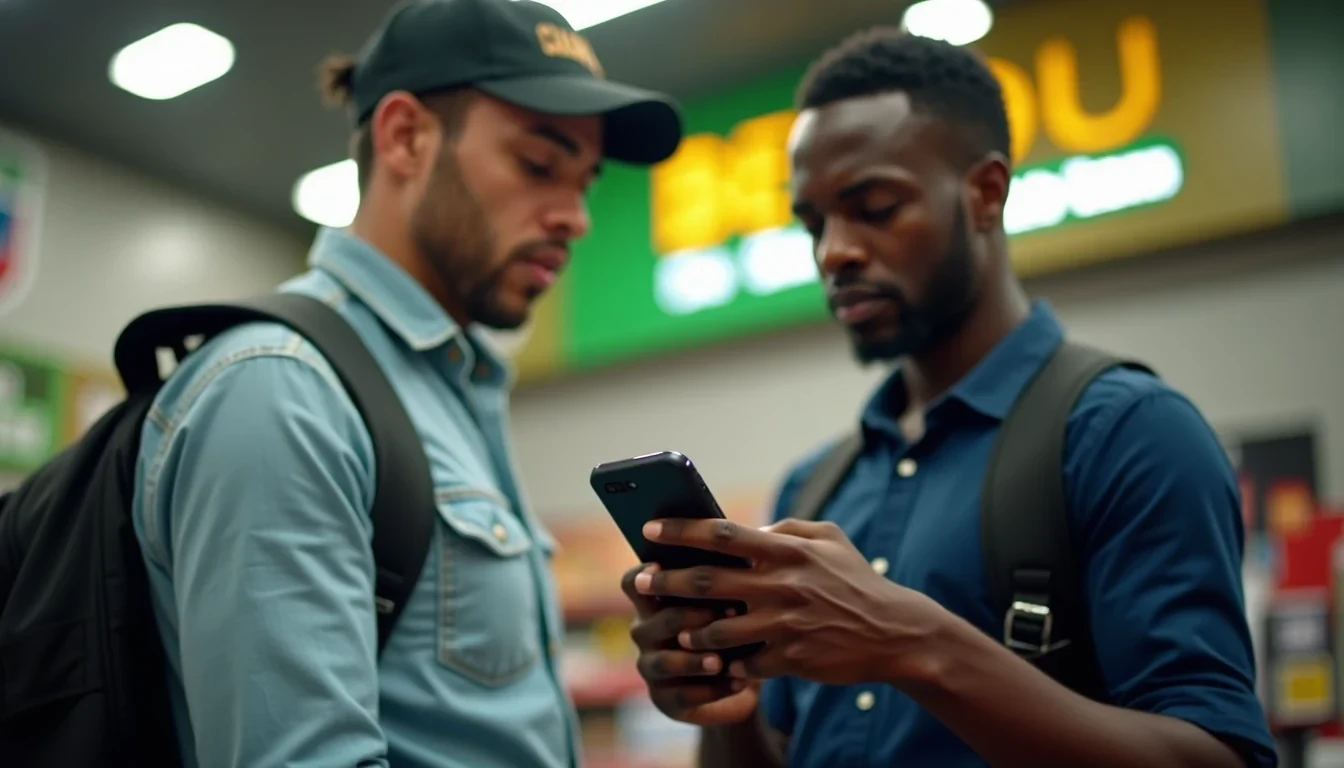
A punter in Rustenburg can walk into Scorebet on Beyers Naude Street, hand over cash, and walk out with a bet slip. Another in the same town can buy a 1ForYou voucher at the spaza on the corner, load it into Betway in under a minute, and never cross a shop threshold. Both are placing the same wager on the same Kaizer Chiefs fixture. The gap between them is a licensing quirk and a payment hack that has split the market into two species of operator, neither of which can fully absorb the other.
How One License Became a National Passport
The regulatory frame that built this divide is simple. A single retail or online bookmaker license from any provincial board, the Western Cape Gambling and Racing Board or the Mpumalanga Economic Regulator, lets a digital operator accept registrations from punters in every province. No branch in Bloemfontein, no counter in Durban, no footprint at all beyond servers and customer service. Retail shops, by contrast, need provincial licensing for each physical site. World Sports Betting and betXchange have spent years accumulating these permits province by province, building out street-level presence the hard way.
This asymmetry means online-only outfits scale differently. Betway SA, Sportingbet SA, 10bet, SuperSportBet, SunBet, Interbet, Lulabet, and SportyBet have all entered or grown under the lighter regime. Between 35 and 45 of the 60-plus licensed online betting sites operate with zero retail presence. The National Gambling Board still licenses hundreds of traditional small-scale bookmakers in physical tattersalls and local shops, but the growth capital and marketing noise have flowed to the digital-first brands.
The Voucher Workaround
The historical lock that retail held on cash-heavy punters has broken. Mobile payment vouchers, OTT Vouchers, 1ForYou, and Blu Vouchers, now sit on shelves at grocery stores and spaza shops nationwide. A punter buys one with physical cash, enters the PIN into an app, and the balance lands instantly. No bank account required, no branch visit, no three-day EFT delay.
This is the infrastructure that lets online-only operators reach the unbanked and the cash-preferring, the demographic that retail shops assumed was theirs permanently. The voucher system has effectively unbundled the two services that retail shops used to bundle: the conversion of cash into betting credit, and the placement of the wager itself. Once those separated, the shop became optional.
The Retail Holdouts
Not everyone is retreating to servers. Scorebet still runs physical shops across the North West, Northern Cape, and Mpumalanga, locations like Biblio Plaza and Bethlehem Street in Rustenburg, the branch at 5-7 Phakamile Mabija Road in Kimberley, and counters in Witbank and Siyabuswa. The operator has added online sports betting, lucky numbers, and live games for customers far from those branches, but the retail footprint remains core to its identity.
Goldrush goes further, treating physical venues as the main event. Its 39 entertainment venues and betting shops nationwide include 12 in KwaZulu-Natal, its densest region, 8 across Johannesburg and Pretoria, and 9 in the Eastern Cape split between Goldrush-branded outlets and Bingo Royale partner venues. The Port Elizabeth shop sits at Cleary Park Shopping Centre on the corner of Stanford and Middleton Roads. East London has Owethu House on Terminus Street. Graaff Reinet runs from 118-124 Church Street. These are not anonymous kiosks. They are deliberate placements in commercial centres, offering electronic bingo terminals, slots, and retail sports betting alongside whatever online platform Goldrush also maintains.
The model here is different. Retail operators bet that the social and tactile experience of a venue, the immediate cash payout, and the FICA verification done in person with an ID document, retains a segment of punters who find app-based betting sterile or suspicious. They are not wrong about the segment. They may be wrong about its growth trajectory.
The Friction Points Punters Actually Feel
FICA compliance hits differently across the divide. In a shop, you show your ID, get verified on the spot, and take your winnings in cash if the bet lands. Online, you upload documents, wait for processing, and withdraw via EFT to a bank account, typically one to three business days. For punters who need cash in hand immediately, or who lack the documentation for smooth digital verification, retail retains a hard advantage.
But the deposit side has inverted. Vouchers have made funding an online account faster than travelling to a shop. For punters in rural North West or Limpopo towns without a Goldrush or Scorebet branch, the digital option was never a choice between convenience and atmosphere. It was the only game available.
What the Split Means for Market Strategy
The operator landscape now sorts cleanly into two camps. Retail-first brands like Scorebet and Goldrush must manage property, staff, provincial licensing per venue, and the capital intensity of physical expansion. Online-only brands like Betway SA, which manages millions of digital punters through web and app, or Sportingbet SA, an original online pioneer that has never operated a shop, spend on server infrastructure, voucher integration, and acquisition marketing instead.
SunBet presents an odd case: the digital arm of Sun International, which owns physical casino resorts, yet operates online-only for betting. The strategic separation is telling. Even a parent company with deep retail heritage has concluded that the betting audience does not need or want a shop attached to the brand.
For anyone tracking how these models compete and coexist, the underlying numbers and platform performance tell part of the story. Punters comparing options often start with Stats about betting sites to gauge uptime, licensing status, and platform reliability before committing to either a download or a drive to the nearest branch.
The market is not resolving toward one model. It is stabilising into two, separated by cash handling, voucher penetration, and the regulatory accident that lets one license cover a nation. Retail will not disappear. But every new voucher sold at a spaza shop is a vote for the other side, and the tally is running in one direction.
